




Framework & Playbook
Growth ABM Campaign Program Plan
A campaign program brief for Growth ABM that engages tiered account segments with scalable messaging, a tier-based playbook, and digital channels.
- By
- ForgeX Research
Key takeaways
Growth ABM runs on a single campaign program brief that governs engagement across every tier, built with sales and other cross-functional teams.
The brief has four sections: objectives, messaging and content, execution, and measurement.
Tactical eligibility is set by tier, so the most expensive tactics go to the accounts that justify them.
Research summary
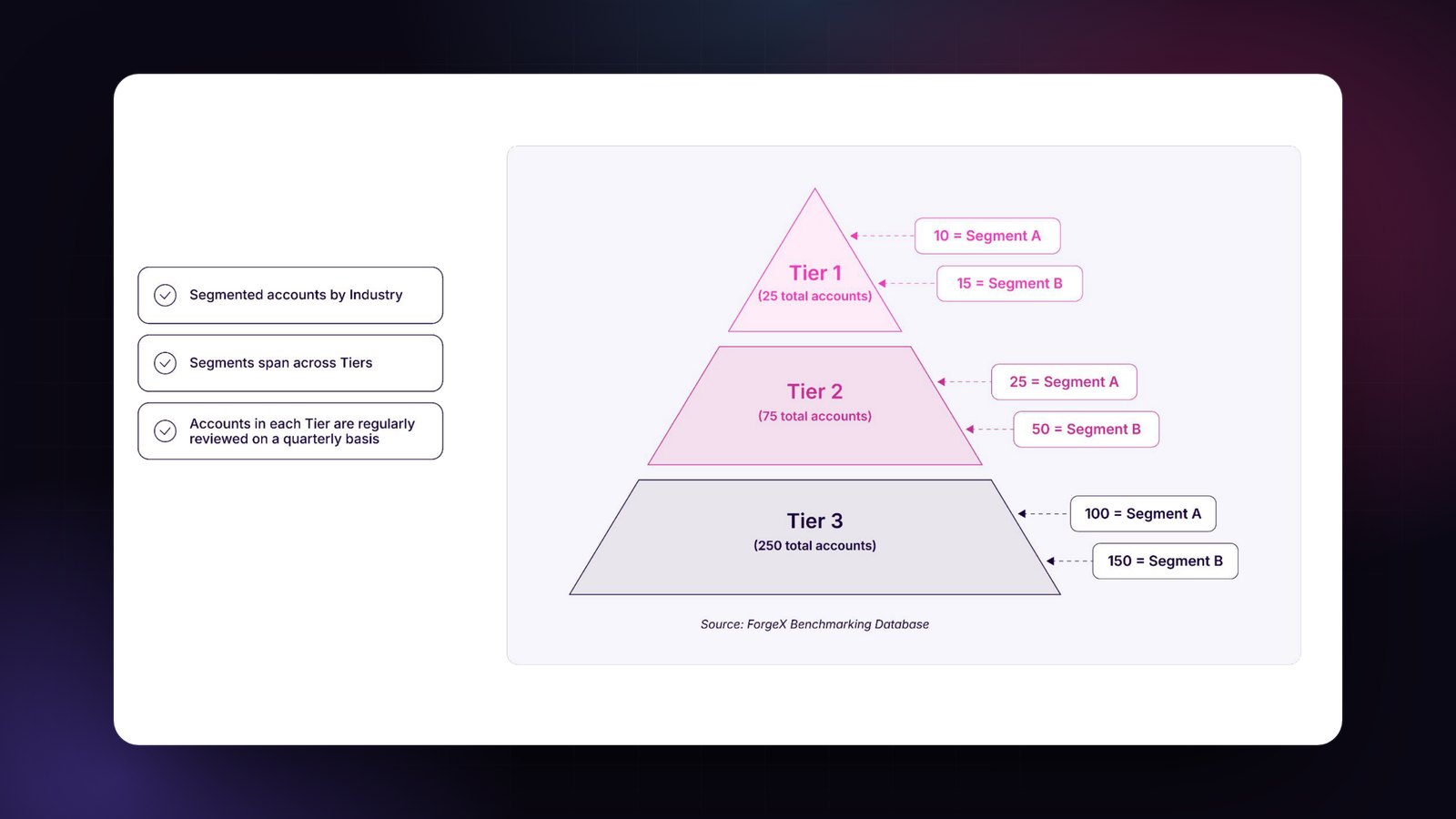
Growth ABM runs on a single campaign program brief that governs engagement across every tier, built with sales and other cross-functional teams. This framework lays out the four sections of that brief, shows how messaging and content scale by segment and persona, and walks through a benchmarked example of tiered segmentation and tactical eligibility.
With this framework & playbook, you can:
- Structure a Growth ABM campaign program brief across objectives, messaging and content, execution, and measurement.
- Assign tactical eligibility by tier so the most expensive tactics go to the accounts that justify them.
- Build modular segment- and persona-level content that automation can assemble based on intent and engagement signals.
Questions
- What is the Growth ABM Campaign Program Plan?
- A campaign program brief for Growth ABM that engages tiered account segments with scalable messaging, a tier-based playbook and digital channels.
- How does messaging scale in Growth ABM?
- Content is built in modules at the segment and persona level, so automation can assemble it based on intent and engagement signals.
- What example does the framework include?
- A benchmarked example of tiered segmentation and tactical eligibility.
ForgeX Community
Carry the conversation into the ForgeX Community
Join 1,000+ GTM leaders and practitioners comparing notes on what's working. The discussion on this framework & playbook continues in #abm-chat-general.
Questions about this research? Ask an analyst