




Framework & Playbook
Account-Based Messaging and Content Framework
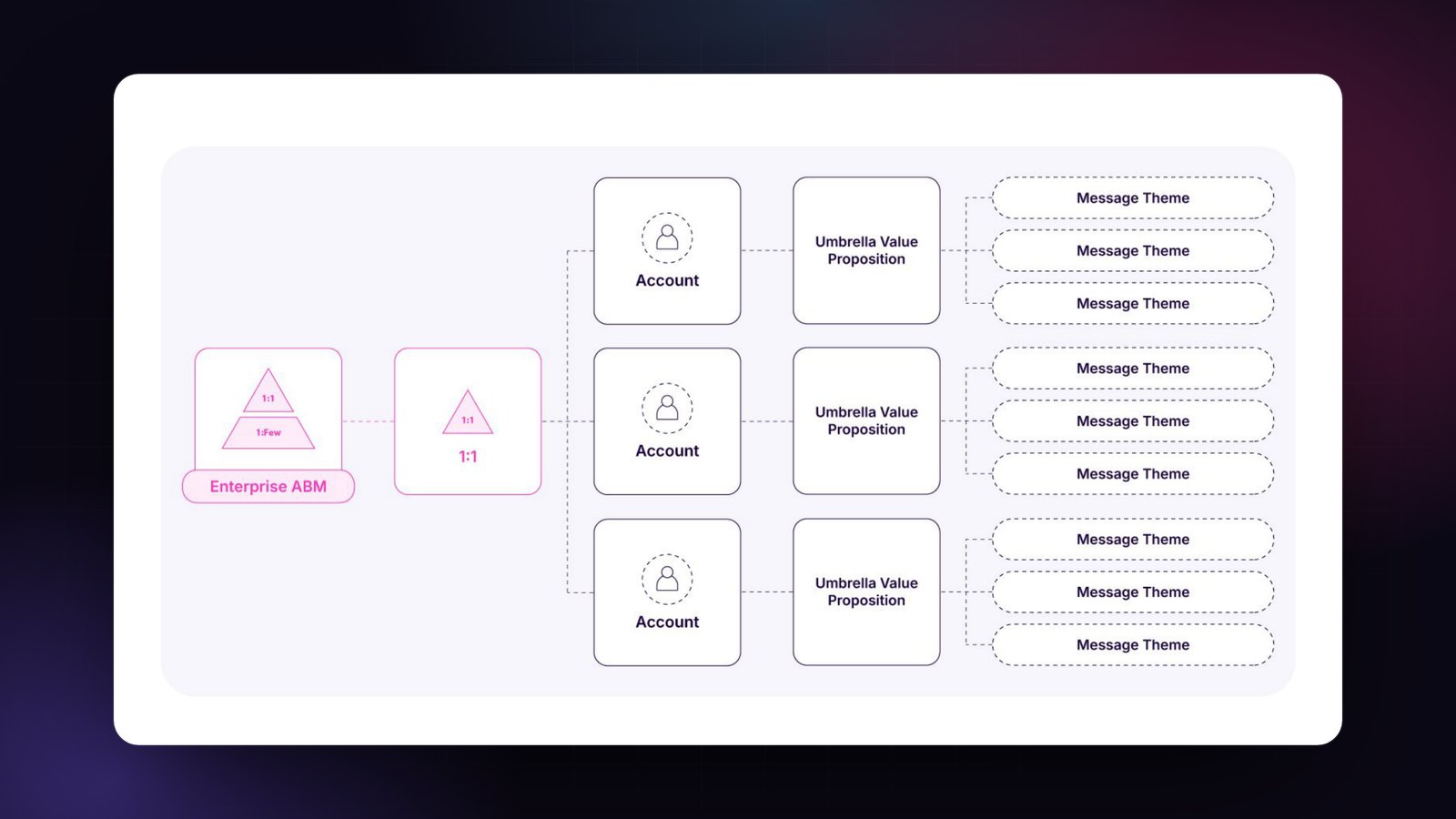
Structure account-based messaging from one umbrella value proposition into themes, adapt it to each deployment model, and map content to four goals.
- By
- ForgeX Research
Key takeaways
Account-based messaging starts from one umbrella value proposition, broken into message themes with six defined components.
The hierarchy stays consistent at the top and personalizes beneath it, with approaches for 1:1, 1:Few and two Growth ABM models.
Every content program should cover four goals: thought leadership, social proof, product education and investment validation.
Research summary
The Account-Based Messaging and Content Framework shows how to build a messaging hierarchy that stays consistent at the top and personalizes beneath it. It defines the umbrella value proposition and message theme components, applies them to 1:1, 1:Few, and two Growth ABM approaches, and sets out the four goals that every content program should cover.
With this framework & playbook, you can:
- Write an umbrella value proposition and break it into message themes with six defined components.
- Choose the level of messaging personalization that fits each deployment model and your team's capacity.
- Audit content against thought leadership, social proof, product education, and investment validation.
Questions
- What does the Account-Based Messaging and Content Framework cover?
- How to build a messaging hierarchy from one umbrella value proposition into themes, adapt it to each deployment model, and map content to four goals.
- What are the four content goals?
- Thought leadership, social proof, product education and investment validation.
- How much should messaging be personalized?
- The level of personalization should fit the deployment model and the team's capacity.
ForgeX Community
Carry the conversation into the ForgeX Community
Join 1,000+ GTM leaders and practitioners comparing notes on what's working. The discussion on this framework & playbook continues in #abm-chat-general.
Questions about this research? Ask an analyst